
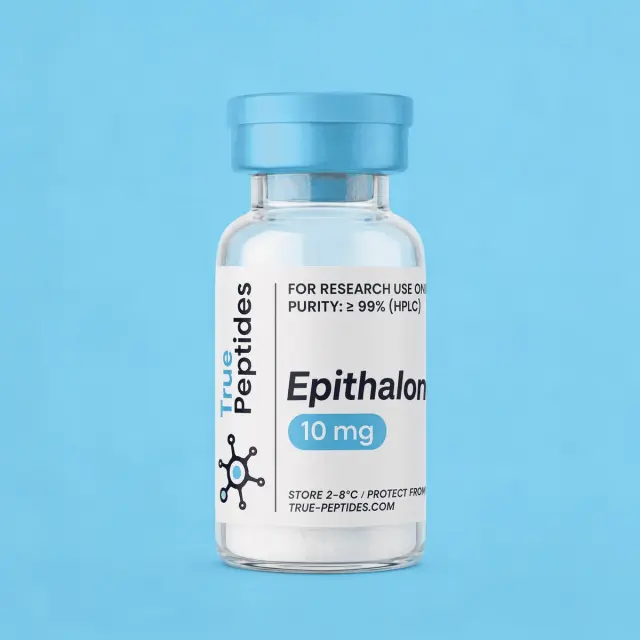
Epithalon
Price range: $43.00 through $110.00
Epitalon is a fascinating peptide studied in the fields of longevity, cellular biology, and aging research. Its connection to telomeres, pineal function, and circadian biology has made it popular among researchers and health enthusiasts worldwide
Epitalon (Epithalon) Peptide: Research, Potential Benefits, Safety, and Longevity Science Explained
Introduction
Epitalon, also known as Epithalon or Epithalone, is a synthetic tetrapeptide that has gained global attention in the longevity, anti-aging, and peptide research communities. Interest in Epitalon has grown across the USA, UK, and Europe because of its connection to research areas such as cellular aging, pineal gland function, melatonin regulation, and telomere biology.
Although often discussed as a “longevity peptide,” Epitalon remains a research compound rather than an approved medicine. Current scientific discussions focus on understanding its biological activity, possible mechanisms, and whether future clinical studies can confirm its potential applications.
What Is Epitalon?
Epitalon is a short synthetic peptide made from four amino acids:
Alanine – Glutamic Acid – Aspartic Acid – Glycine (AEDG)
Researchers developed Epitalon based on studies of Epithalamin, a pineal gland peptide extract. While the two compounds are related historically, they are not identical. Epithalamin is a more complex peptide mixture, while Epitalon is a specific laboratory-created tetrapeptide.
The compound became widely known through longevity research associated with scientists studying the relationship between the pineal gland, aging processes, and biological rhythms. Today, Epitalon continues to be investigated in laboratory and early human research settings.
How Does Epitalon Work?
The exact mechanism of Epitalon is still being researched. Scientists have explored several possible pathways, including:
Telomere and Cellular Aging Research
One of the main reasons Epitalon attracts attention is its connection to telomeres — protective structures at the ends of chromosomes that naturally shorten as cells divide.
Some laboratory studies have investigated whether Epitalon may influence telomerase activity, an enzyme involved in maintaining telomeres. However, these findings come mainly from experimental research, and more independent clinical studies are needed before drawing conclusions about human longevity effects.
Pineal Gland and Melatonin Research
The pineal gland plays an important role in regulating melatonin production, a hormone associated with sleep-wake cycles and circadian rhythm.
Research discussions around Epitalon often focus on whether it may influence pineal gland activity and biological timing mechanisms. Maintaining healthy circadian rhythms is considered important for overall wellness, but Epitalon’s direct effects in humans remain under investigation.
Antioxidant and Cellular Protection Studies
Some studies have explored Epitalon’s possible relationship with oxidative stress, gene expression, and cellular protection pathways. These areas are important in aging research because oxidative damage is one factor scientists study when examining age-related biological changes.
Potential Benefits of Epitalon: What Research Suggests
Epitalon is commonly discussed online for several potential benefits, including:
- Supporting healthy aging research
- Influencing circadian rhythm pathways
- Supporting cellular longevity studies
- Investigating antioxidant activity
- Exploring neuroendocrine functions
However, it is important to separate research findings from marketing claims. At present, strong clinical evidence proving that Epitalon extends human lifespan or reverses aging is not available. Most evidence comes from laboratory studies, animal research, or limited human investigations.
Epitalon Safety and Side Effects
Because Epitalon is not approved as a standard pharmaceutical treatment by major regulatory agencies, long-term human safety information remains limited.
Researchers continue to examine important questions, including:
- Long-term effects on human health
- Optimal safety standards
- Product purity and quality control
- Possible effects related to biological pathways such as telomerase
Anyone interested in peptide research should carefully evaluate scientific evidence, product quality, and professional medical guidance before considering any research compound.
Is Epitalon Legal in the USA, UK, and Europe?
Epitalon’s regulatory status varies by country. In general, it is considered a research compound rather than an approved medication for treating diseases or extending lifespan. Availability, import rules, and medical regulations differ between regions.
Consumers in the USA, UK, and Europe should always check current regulations and avoid relying only on commercial claims when evaluating peptide products.
The Future of Epitalon Research
Interest in Epitalon continues because aging science is becoming a major area of biomedical research. Scientists are exploring how peptides, hormones, genetics, and cellular pathways interact with the aging process.
Future clinical studies will be important to determine whether Epitalon has meaningful applications beyond laboratory research. Until stronger evidence becomes available, Epitalon should be viewed as an interesting scientific compound under investigation rather than a proven anti-aging solution.
Conclusion
Epitalon is a fascinating peptide studied in the fields of longevity, cellular biology, and aging research. Its connection to telomeres, pineal function, and circadian biology has made it popular among researchers and health enthusiasts worldwide.
However, while early studies have produced interesting findings, more high-quality human research is needed to confirm its effectiveness and safety. Understanding the difference between scientific research and promotional claims is essential when exploring emerging longevity compounds like Epitalon.
| QUANTITY | 10mg, 50mg |
|---|
Be the first to review “Epithalon”
Related products
Peptide Catalog
Peptide Catalog
Peptide Catalog

Peptide Catalog
Peptide Catalog
Reviews
There are no reviews yet.