Retatrutide for Sale
Buy Retatrutide for Sale at True Peptides. Learn about retatrutide research, triple-receptor activity, product quality, testing, and research-use information.

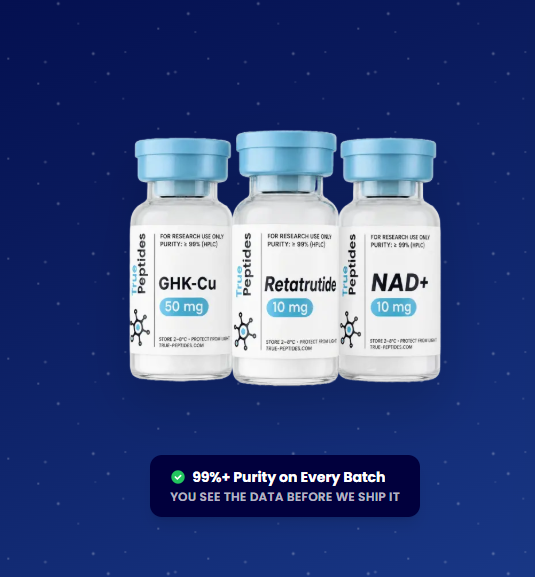
Welcome to True Peptides, a research-focused supplier of premium peptide compounds for qualified laboratories, scientists, and research professionals. Our collection includes carefully documented research peptides spanning metabolic, tissue, growth-hormone, neurological, and other areas of peptide science.
Among the compounds attracting significant scientific interest is retatrutide (LY3437943), an investigational triple-receptor agonist being developed by Eli Lilly. Retatrutide has become an important subject in metabolic research because of its simultaneous activity at the GIP, GLP-1, and glucagon receptors.
If you are searching online for retatrutide for sale, retatrutide peptide, retatrutide research peptide, or a retatrutide supplier, it is essential to understand the distinction between legitimate laboratory research materials and approved medicines. Retatrutide is currently investigational and is not an FDA-approved medication. True Peptides products are intended strictly for laboratory research and are not for human or veterinary use.

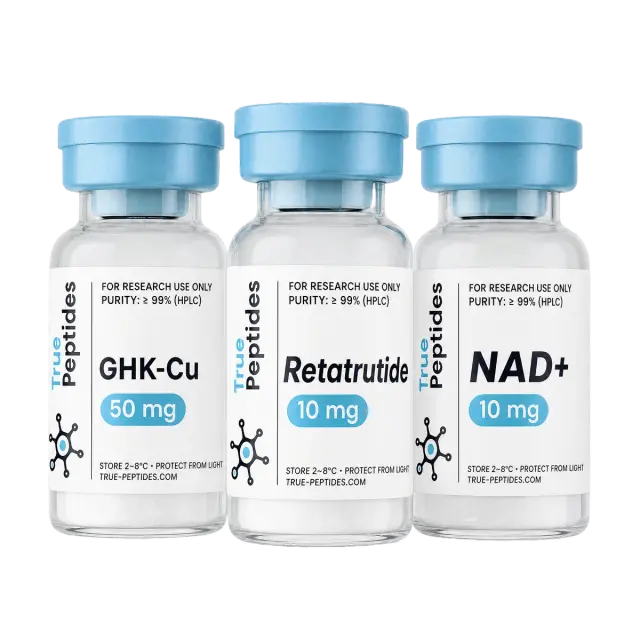
Retatrutide is a synthetic peptide compound also identified as LY3437943. It is being studied as a once-weekly triple hormone receptor agonist targeting three metabolic pathways:
This three-receptor profile is what makes retatrutide particularly interesting within modern metabolic research.
Unlike compounds that primarily target one receptor, retatrutide has been designed to simultaneously influence three signaling pathways involved in glucose regulation, appetite, energy metabolism, and other physiological processes.
Eli Lilly describes retatrutide as a first-in-class GIP, GLP-1, and glucagon triple receptor agonist. The compound is currently being evaluated in Phase 3 clinical programs covering obesity, type 2 diabetes, knee osteoarthritis pain, obstructive sleep apnea, and other metabolic or cardiometabolic conditions.




The development of incretin-based medicines has significantly expanded interest in metabolic peptide science. Earlier compounds helped establish the importance of GLP-1 signaling, while newer molecules have investigated combinations of multiple hormonal pathways.
Retatrutide represents another step in this research direction.
Its mechanism combines GLP-1 and GIP activity with glucagon receptor activity, creating a broader receptor profile than traditional GLP-1-only compounds.
Researchers are investigating whether this multi-receptor approach can influence several aspects of metabolic physiology simultaneously.
Clinical research has produced substantial results. In June 2026, Eli Lilly reported Phase 3 TRIUMPH-1 results in which participants receiving the highest studied dose experienced an average 28.3% reduction in body weight at 80 weeks. These are clinical-trial findings from an investigational drug and should not be interpreted as guaranteed results for individuals or as evidence supporting use of unapproved products.
True Peptides offers access to a broader research catalog encompassing several peptide categories. Retatrutide is particularly relevant to metabolic research, while other compounds have very different mechanisms and research applications.
Semaglutide is primarily a GLP-1 receptor agonist and is used in approved medicines for specific indications.
Retatrutide differs because it targets three receptors: GIP, GLP-1, and glucagon.
This makes the compounds scientifically distinct and means they should not simply be treated as interchangeable peptides.
Tirzepatide is a dual GIP and GLP-1 receptor agonist. Retatrutide adds glucagon receptor activity to those two pathways.
This difference is central to ongoing research into whether simultaneous activation of three metabolic pathways can provide additional physiological effects.
CJC-1295 belongs to another category of peptide research. It is associated with growth-hormone-releasing hormone signaling rather than the GLP-1/GIP/glucagon pathway targeted by retatrutide.
Ipamorelin is a growth hormone secretagogue studied in relation to growth hormone signaling. Retatrutide is instead primarily associated with metabolic receptor research.
BPC-157 and TB-500 are commonly investigated in areas involving tissue biology and cellular processes. Their research profiles differ considerably from retatrutide’s focus on metabolic signaling.

Retatrutide, also known as LY3437943, is an investigational peptide-based triple receptor agonist targeting GIP, GLP-1, and glucagon receptors.
No. Retatrutide has GLP-1 receptor activity, but it also targets GIP and glucagon receptors. Calling it simply a GLP-1 does not accurately describe its mechanism.
No. Eli Lilly currently identifies retatrutide as investigational and not approved by regulatory agencies.
Clinical development has investigated obesity, type 2 diabetes, knee osteoarthritis pain, obstructive sleep apnea, cardiovascular outcomes, chronic low back pain, kidney-related outcomes, and metabolic dysfunction-associated steatotic liver disease.
Tirzepatide targets GIP and GLP-1 receptors. Retatrutide targets those pathways plus the glucagon receptor, giving it a triple-agonist profile.
Important factors include batch traceability, analytical documentation, independent testing, clear product identification, and transparent research-use policies.

Where Can I Bulk Buy Peptides? A Complete Guide to Finding Reliable Suppliers If you’re [...]

Peptides Near Me: How to Find Trusted Products and Providers If you’ve been searching online [...]

How to Buy Retatrutide Online: What You Need to Know Before Searching If you are [...]

Retatrutide for Sale UK: Research, Availability, Safety and What Buyers Should Know Interest in retatrutide [...]
True Peptides Reviews: Quality, Testing, COAs, Products and What to Know Searching for True Peptides [...]

GLP-3 Peptide Buy: What It Means, Retatrutide Research, Safety and Availability If you have searched [...]
True Peptides Official Website: Research Peptides, Quality, COAs and Product Information If you are searching [...]
1 Comment
Retatrutide represents one of the most closely watched areas of contemporary metabolic peptide research. Its triple-receptor mechanism has created significant scientific interest and generated an expanding body of clinical research.
At True Peptides, retatrutide sits within a wider collection of research compounds spanning metabolic, tissue, growth-hormone, mitochondrial, and neuropeptide research. Our approach focuses on giving qualified researchers access to clearly documented materials while maintaining a strict distinction between laboratory research and medical treatment.