
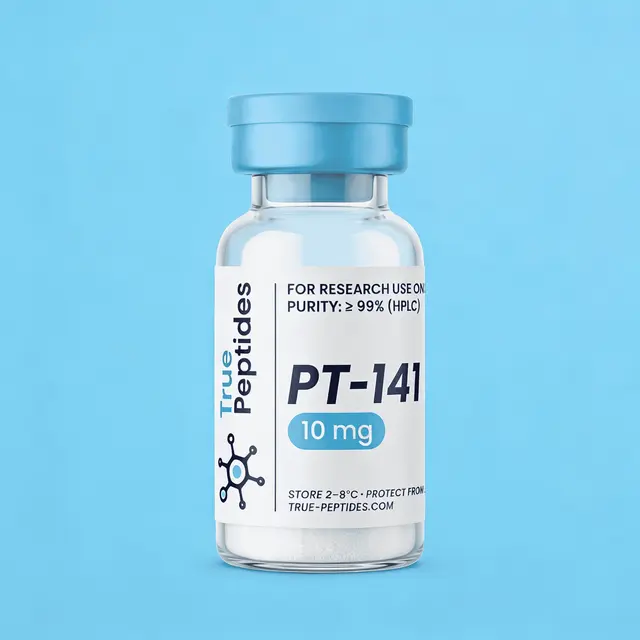
PT-141
$42.00
PT-141, or bremelanotide, is a melanocortin receptor agonist with a specific medical role in treating acquired, generalized HSDD in certain premenopausal women. Although the compound is frequently discussed online for broader sexual-health applications, evidence and regulatory approval should be distinguished from anecdotal experiences and marketing claims.
PT-141: What It Is, Uses, Benefits, and Safety Information
PT-141, also known as bremelanotide, is a melanocortin receptor agonist that has been studied and used in relation to sexual desire and arousal. Unlike medications that primarily work by increasing blood flow, PT-141 acts on certain receptors in the central nervous system. This difference has made it a subject of interest in sexual health research.
What Is PT-141?
PT-141 is the research name commonly associated with bremelanotide, a synthetic peptide derived from melanocortin-related compounds. It is designed to activate melanocortin receptors, particularly receptors involved in pathways associated with sexual behavior and arousal.
Bremelanotide is available as a prescription medicine in the United States under the brand name Vyleesi for a specific indication: acquired, generalized hypoactive sexual desire disorder (HSDD) in premenopausal women when the condition is not attributable to a medical or relationship problem, another medication, or the effects of another substance.
How Does PT-141 Work?
PT-141 works differently from phosphodiesterase-5 (PDE5) inhibitors such as sildenafil. PDE5 inhibitors primarily affect blood-flow mechanisms, whereas bremelanotide activates melanocortin receptors in the nervous system.
Because of this mechanism, PT-141 has attracted interest in situations where changes in sexual desire or arousal may involve neurological pathways rather than blood flow alone. However, individual responses can vary, and the medication is not appropriate for every person experiencing sexual difficulties.
Potential Uses of PT-141
The medically established use of bremelanotide is relatively specific. It is approved for treating acquired, generalized HSDD in certain premenopausal women.
Online discussions sometimes describe PT-141 as a treatment for a broader range of sexual concerns, including erectile difficulties or low libido in men. These claims should be interpreted carefully. Research and regulatory approval do not necessarily support every use promoted online, and a medication’s approved indication can differ from experimental or off-label applications.
Anyone considering PT-141 for a sexual-health concern should first determine the underlying cause of that concern with a qualified healthcare professional.
PT-141 Benefits
Potential benefits depend on the condition being treated and the individual receiving treatment. Clinical research involving bremelanotide has examined improvements in sexual desire and distress associated with HSDD.
It is important to distinguish these findings from marketing claims surrounding PT-141 sold online as a research peptide. Products marketed outside regulated medical channels may have uncertain identity, purity, concentration, storage conditions, or manufacturing quality.
PT-141 Side Effects and Safety
Bremelanotide can cause side effects. Commonly reported reactions include nausea, flushing, injection-site reactions, headache, and vomiting. Temporary increases in blood pressure can also occur.
The medication is not appropriate for everyone. For example, people with certain cardiovascular conditions or uncontrolled hypertension may face additional risks. Bremelanotide can also interact with some medications.
Because sexual dysfunction can sometimes be associated with cardiovascular disease, hormonal changes, medication effects, psychological factors, or other medical conditions, self-treatment may delay appropriate diagnosis.
Is PT-141 Legal and Available?
The legal status and availability of PT-141 products depend on the country and the specific product. In the United States, bremelanotide is an FDA-approved prescription medication for a defined medical indication, while products marketed online as “PT-141” or “research peptides” may not have the same regulatory status.
Consumers should verify the regulatory status of any product and obtain prescription medicines through legitimate healthcare and pharmacy channels.
PT-141
PT-141, or bremelanotide, is a melanocortin receptor agonist with a specific medical role in treating acquired, generalized HSDD in certain premenopausal women. Although the compound is frequently discussed online for broader sexual-health applications, evidence and regulatory approval should be distinguished from anecdotal experiences and marketing claims.
If you are considering PT-141, discuss your symptoms, medical history, current medications, and potential risks with a qualified healthcare professional. This can help determine whether bremelanotide is appropriate and whether another underlying condition should be investigated.
Be the first to review “PT-141”
Related products
Peptide Catalog
Peptide Catalog
Peptide Catalog
Reviews
There are no reviews yet.