
Uncategorized
GLP-3 Peptide Buy
Sep
GLP-3 Peptide Buy: What It Means, Retatrutide Research, Safety and Availability
If you have searched online for “GLP-3 peptide buy,” you may have encountered websites describing GLP-3 as the newest generation of metabolic peptides. However, there is an important scientific distinction to understand before evaluating products using this name: GLP-3 is not an officially recognized human hormone, peptide, receptor, or approved drug class.
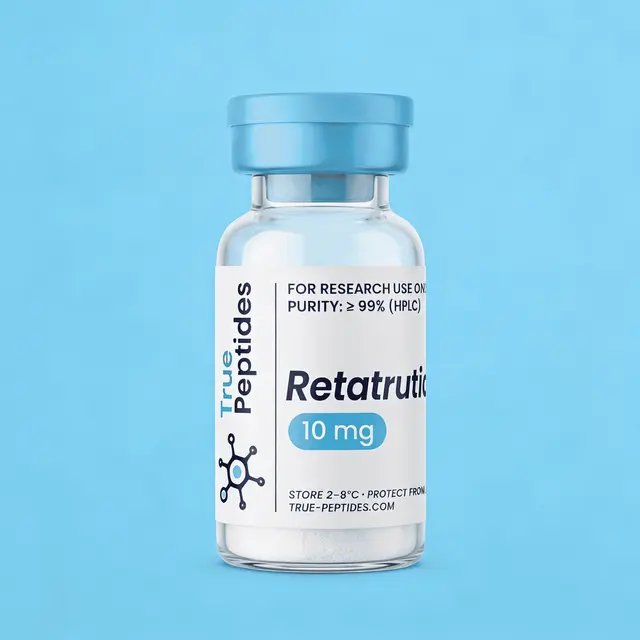
In current online peptide discussions, the term “GLP-3” is most commonly used as an informal nickname for retatrutide (LY3437943), an investigational molecule developed by Eli Lilly that activates three metabolic receptors: GLP-1, GIP, and glucagon. Lilly itself describes retatrutide as a “triple agonist,” which is a more scientifically accurate description.
This guide explains what people mean when they search for GLP-3 peptide products, how retatrutide works, how it differs from established GLP-1 medicines, and what to know about online listings.
What Is the GLP-3 Peptide?
There is no naturally occurring hormone officially called GLP-3. Human biology includes glucagon-like peptide-1 (GLP-1) and glucagon-like peptide-2 (GLP-2), but “GLP-3” does not represent a third naturally occurring member of this numbered hormone family.
The phrase has instead become an internet search term associated with triple-receptor metabolic compounds, particularly retatrutide. The “3” generally refers to the fact that retatrutide activates three different receptor pathways rather than representing a third GLP hormone.
Therefore, when someone searches for GLP-3 peptide buy, they may actually be looking for information about retatrutide.
What Is Retatrutide?
Retatrutide is an investigational peptide-based molecule being developed by Eli Lilly. Its development code is LY3437943.
The compound is designed to activate three receptors:
- GLP-1 receptor
- GIP receptor
- Glucagon receptor
This triple mechanism distinguishes retatrutide from single-receptor GLP-1 medicines and dual GIP/GLP-1 medicines.
Researchers are studying whether simultaneously influencing these pathways can affect body weight, glucose regulation, energy metabolism, and other metabolic processes.
Why Is Retatrutide Sometimes Called GLP-3?
The nickname largely comes from the evolution of metabolic drug terminology.
Semaglutide is a GLP-1 receptor agonist. Tirzepatide activates both GIP and GLP-1 receptors. Retatrutide activates GIP, GLP-1, and glucagon receptors.
Some online communities therefore began using “GLP-3” as shorthand for a three-receptor metabolic agonist.
That terminology can be convenient for search purposes, but it can also create confusion. GLP-3 is not the scientific name of retatrutide, and treating it as a distinct naturally occurring peptide can lead to misunderstandings about the compound.
GLP-3 Peptide Buy: What Should You Know?
People searching for GLP-3 peptide buy may encounter products advertised under names such as GLP-3, GLP-3 peptide, GLP-3 RT, triple agonist, or retatrutide.
These labels should be examined carefully.
An online product name does not establish the identity, purity, potency, regulatory status, or safety of the material inside a container. This is particularly important with investigational compounds.
Eli Lilly states that retatrutide is not currently FDA-approved and remains an investigational medication being evaluated in clinical trials. Lilly also warns that products sold outside its clinical trials are not verified for safety, purity, or dosing.
Consequently, consumers should not assume that a product marketed as “GLP-3 peptide” is an approved medicine or equivalent to material used in a clinical trial.
Retatrutide and Metabolic Research
Retatrutide has generated substantial interest because of its unique triple-receptor mechanism.
Clinical research has examined its effects in areas including obesity and type 2 diabetes, while additional studies have investigated related cardiometabolic and obesity-associated conditions.
The scientific interest comes from the possibility that GLP-1, GIP, and glucagon signaling may influence different components of metabolic physiology.
However, research results should be interpreted within the context of clinical trials. A result observed in a controlled study does not mean that an unapproved product purchased online will produce the same outcome.
GLP-3 vs. GLP-1
GLP-1 is a real biological hormone and an established pharmacological target. Several approved medicines work through the GLP-1 receptor.
The phrase “GLP-3,” by contrast, does not describe a naturally occurring hormone.
This distinction is particularly important for consumers researching weight-management medications. Semaglutide and other approved GLP-1 medicines have undergone regulatory review for their specific indications, while retatrutide remains under clinical investigation.
GLP-3 vs. Tirzepatide
Tirzepatide is another important compound in metabolic medicine. It activates the GIP and GLP-1 receptors, making it a dual agonist.
Retatrutide adds glucagon receptor activity, making it a triple agonist.
The difference can be summarized simply:
| Compound | Primary receptor activity | Status |
|---|---|---|
| Semaglutide | GLP-1 | Approved for specific indications |
| Tirzepatide | GIP + GLP-1 | Approved for specific indications |
| Retatrutide | GIP + GLP-1 + glucagon | Investigational |
| “GLP-3” | Informal term | Not an official drug |
The table illustrates why “GLP-3” can be misleading: it describes receptor count informally rather than identifying an actual hormone.
Safety and Product Quality
Anyone researching peptide products should pay close attention to product identity and quality.
Important considerations include:
- Clear identification of the compound
- Batch information
- Analytical testing
- Purity documentation
- Appropriate storage information
- Transparent regulatory status
- Clear research-use labeling
Products sold through unverified online channels may have uncertain composition or quality. A label claiming “GLP-3” does not prove that the product contains retatrutide or that its concentration matches the advertised specification.
For investigational compounds, this distinction is particularly important because they have not undergone the same regulatory evaluation as approved medicines.
Is GLP-3 Available to Buy?
There is no FDA-approved medicine officially called GLP-3. If a website uses the term, it is important to determine what actual compound it is referring to.
If the listing refers to retatrutide, the compound remains investigational. Lilly states that retatrutide is currently being studied in Phase 3 clinical trials and has not received FDA approval.
Therefore, consumers should be cautious with websites presenting “GLP-3 peptide buy” as though it were an ordinary approved pharmaceutical purchase.
Why the Correct Name Matters
Using the correct scientific terminology makes it easier to find reliable information.
Instead of searching only for GLP-3 peptide, researchers and consumers may obtain more useful information by searching for:
- Retatrutide
- Retatrutide LY3437943
- Retatrutide triple agonist
- GIP GLP-1 glucagon receptor agonist
- Retatrutide clinical trials
- Retatrutide regulatory status
These terms connect the search to the actual compound rather than an informal nickname.
Frequently Asked Questions
Is GLP-3 a real peptide?
No. GLP-3 is not an officially recognized endogenous hormone. The term is generally used online as shorthand for triple-receptor metabolic agonists, particularly retatrutide.
Is GLP-3 the same as retatrutide?
In online peptide marketing and search terminology, “GLP-3” commonly refers to retatrutide. However, the terms are not scientifically interchangeable because GLP-3 is not the official name of the molecule.
What receptors does retatrutide target?
Retatrutide targets the GIP, GLP-1, and glucagon receptors, which is why it is described as a triple agonist.
Is retatrutide FDA approved?
No. According to Eli Lilly’s current information, retatrutide remains investigational and is not FDA-approved.
Should I buy a product labeled GLP-3?
A product label alone does not establish identity, purity, safety, or regulatory approval. Anyone evaluating an investigational peptide should verify the actual compound and its regulatory status rather than relying solely on a marketing name.
GLP-3 Peptide Buy
The keyword “GLP-3 peptide buy” reflects growing interest in the newest generation of metabolic peptide research, but the terminology requires clarification. There is no officially recognized GLP-3 hormone or FDA-approved drug called GLP-3.
