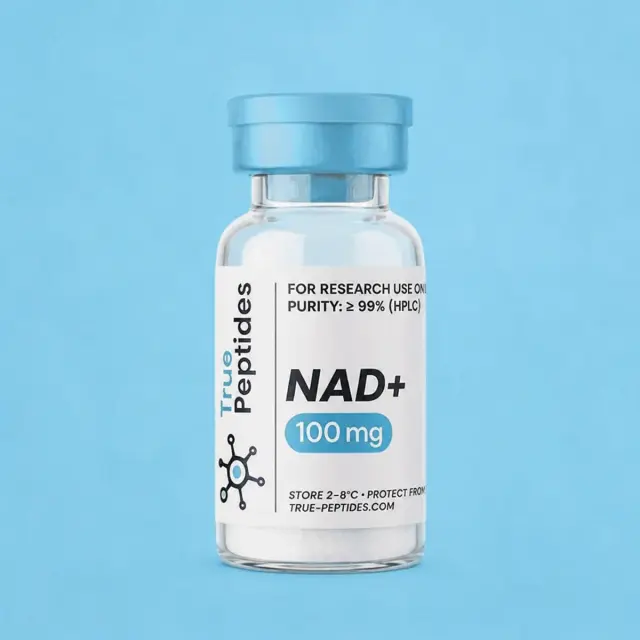
NAD+
Price range: $80.00 through $112.00
Product Specifications
| CAS Number | 53-84-9 |
| Molecular Formula | C21H27N7O14P2 |
| Molecular Weight | 663.4 g/mol |
| Amino Acid Sequence | Nicotinamide Adenine Dinucleotide (nucleotide cofactor, not a peptide) |
| Purity | >99%(HPLC verified) |
| Form | Lyophilized powder |
| Available Sizes | 500mg, 1000mg |
| Storage | Store at -20C (lyophilized) or 2-8C (reconstituted) |
NAD+: Benefits, Uses, Sources, and What You Should Know
NAD+ has become a popular topic in discussions about cellular health, healthy aging, energy metabolism, and wellness. Short for nicotinamide adenine dinucleotide, NAD+ is a molecule naturally found in virtually every cell of the body. It plays an essential role in converting nutrients into energy and supporting several important cellular processes.
As interest in longevity and metabolic health continues to grow, NAD+ supplements and NAD+ therapies are increasingly discussed. But what exactly is NAD+, what does it do, and what does current research say about its potential benefits?
What Is NAD+?
NAD+ is a coenzyme that helps cells perform essential metabolic reactions. It exists in two primary forms: NAD+ and NADH. Together, they participate in redox reactions that help transfer energy within cells.
NAD+ is particularly important for mitochondrial function, where nutrients are converted into usable cellular energy. It is also involved in processes related to DNA repair and cellular signaling.
NAD+ levels can change with age and may also be influenced by factors such as metabolism, physical activity, and overall health. These changes have contributed to scientific interest in strategies designed to maintain or increase NAD+ availability.
What Does NAD+ Do in the Body?
One of the primary functions of NAD+ is supporting energy production. Cells rely on NAD+ to help process carbohydrates, fats, and other nutrients through metabolic pathways.
NAD+ also serves as a substrate for enzymes involved in cellular signaling and DNA maintenance. For example, enzymes called sirtuins use NAD+ as part of their activity, while PARP enzymes use NAD+ in processes associated with DNA damage responses.
Because NAD+ participates in multiple biological pathways, researchers are investigating its potential role in healthy aging, metabolism, neurological function, and other areas of human health.
Potential NAD+ Benefits
Research into NAD+ and related compounds has produced promising findings, particularly in laboratory and animal studies. Potential areas of interest include cellular energy production, metabolic function, mitochondrial health, and mechanisms associated with aging.
However, it is important to distinguish between biological research and proven clinical benefits. Increasing NAD+ levels does not automatically mean that a person will experience greater energy, slower aging, or protection from disease.
Human studies are continuing to investigate whether increasing NAD+ through precursors or other approaches produces meaningful health outcomes.
How Can NAD+ Levels Be Increased?
The body can produce NAD+ through several biochemical pathways. Nutrients related to vitamin B3, including nicotinamide and nicotinamide riboside (NR), can contribute to NAD+ production. Another compound receiving significant research attention is nicotinamide mononucleotide (NMN).
NAD+ itself can also be administered in certain clinical or wellness settings, including intravenous approaches. However, the effectiveness, appropriate use, and long-term safety of NAD+ therapies can vary depending on the method and individual circumstances.
A healthy lifestyle remains important for supporting normal cellular metabolism. Regular physical activity, adequate sleep, a balanced diet, and management of underlying health conditions can all contribute to overall metabolic health.
NAD+ Supplements: What Should You Know?
NAD+ supplements are often marketed for energy, longevity, athletic performance, and healthy aging. However, many products actually contain NAD+ precursors rather than NAD+ itself because the body uses different pathways to produce NAD+.
Research on compounds such as NR and NMN is ongoing. Although some studies have demonstrated that these compounds can increase NAD+ levels, the clinical significance of those increases is still being investigated.
Consumers should therefore be cautious about products making broad anti-aging or disease-treatment claims. Supplements can also vary considerably in quality, formulation, and dosage.
NAD+ and Healthy Aging
The relationship between NAD+ and aging is one of the most active areas of research. Scientists have observed changes in NAD+ metabolism during aging in various experimental models, leading to interest in whether restoring NAD+ availability could influence age-related cellular processes.
While these findings are scientifically interesting, research in humans is still developing. NAD+ should not currently be viewed as a proven anti-aging treatment or a replacement for established preventive healthcare.
Is NAD+ Safe?
NAD+ and its precursors can have different safety profiles depending on the formulation, dose, route of administration, and individual health status. Some people may experience side effects from supplements or NAD+-related treatments.
Anyone considering NAD+ supplementation or intravenous therapy should discuss it with a qualified healthcare professional, particularly if they take medications or have an existing medical condition.
NAD+ is an essential molecule involved in cellular energy production, metabolism, signaling, and other biological processes. Its connection to aging and cellular function has made it an important area of modern biomedical research.
Although early research is promising, many proposed NAD+ benefits require further investigation in well-designed human clinical trials. For now, NAD+ therapies and supplements should be approached thoughtfully, with realistic expectations and professional guidance when appropriate.
| QUANTITY | 500mg, 1000mg |
|---|
Be the first to review “NAD+”
Related products
Peptide Catalog
Peptide Catalog
Peptide Catalog
Peptide Catalog
Peptide Catalog
Reviews
There are no reviews yet.