
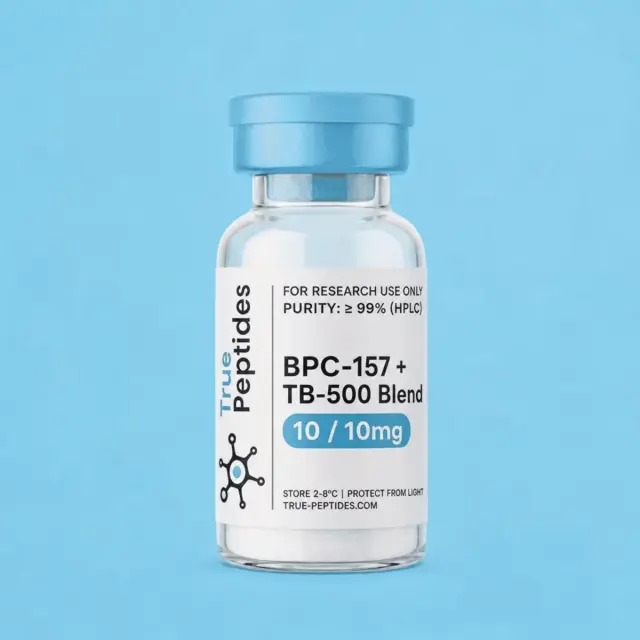
BPC-157 + TB-500 Blend
$110.00
BPC-157 + TB-500 blend is an emerging topic in peptide research, combining two compounds studied for their potential roles in tissue repair, cellular communication, blood vessel development, and recovery pathways.
BPC-157 + TB-500 Blend: Benefits, Mechanism of Action, Research, and Potential Uses
The BPC-157 + TB-500 blend is a combination of two research peptides that have gained attention in the fields of tissue repair, recovery science, and regenerative medicine research. Both peptides have been studied individually for their potential roles in cellular repair processes, inflammation pathways, and tissue regeneration.
This peptide combination is especially popular among researchers exploring muscle recovery, connective tissue health, and biological repair mechanisms. While early laboratory studies have produced interesting findings, BPC-157 and TB-500 remain investigational compounds and require further clinical research to fully understand their effects and potential applications.
What Is BPC-157?
BPC-157 (Body Protection Compound-157) is a synthetic peptide consisting of 15 amino acids. It is derived from a protective protein found in gastric juices, and researchers have investigated its possible effects on different biological repair processes.
Scientific interest in BPC-157 comes from its potential interaction with pathways involved in:
- Tissue regeneration
- Blood vessel formation
- Cellular communication
- Inflammatory response regulation
Research has examined BPC-157 in laboratory models involving muscle injuries, tendon damage, gastrointestinal tissues, and other repair-related processes.
What Is TB-500?
TB-500 is a synthetic version of a naturally occurring peptide fragment related to Thymosin Beta-4 (TB4), a protein involved in cell migration and tissue development.
Thymosin Beta-4 has been studied for its role in:
- Cell movement
- Blood vessel development
- Tissue remodeling
- Recovery mechanisms
Because of these properties, TB-500 has attracted interest in regenerative biology and recovery research.
How Does the BPC-157 + TB-500 Blend Work?
The combination of BPC-157 and TB-500 is based on the idea of targeting multiple biological pathways associated with repair and regeneration.
Supporting Tissue Repair Pathways
BPC-157 research has focused on its possible influence on growth factors and cellular signaling involved in tissue recovery. TB-500 research has explored how thymosin-related pathways may support cell migration and structural repair.
Together, researchers are investigating whether these peptides may have complementary effects on the body’s natural recovery processes.
Promoting Blood Vessel Formation
One area of interest surrounding both peptides is angiogenesis, the process through which new blood vessels develop.
Healthy blood vessel formation is important because tissues require oxygen and nutrients to support normal repair processes. Research has examined whether these peptides may influence pathways related to vascular development.
Supporting Cellular Movement
TB-500 has been studied for its connection to actin regulation, a cellular structure involved in movement and organization. Cellular migration is an important part of many biological repair mechanisms.
BPC-157 has also been researched for its potential role in supporting communication between cells during recovery processes.
Potential Benefits of BPC-157 + TB-500 Blend
Although more human research is needed, scientific studies have explored several potential areas of interest.
1. Muscle Recovery Research
Athletes and fitness communities have shown interest in BPC-157 and TB-500 because muscle recovery depends on complex biological processes involving inflammation control, cell repair, and tissue remodeling.
Researchers are investigating whether these peptides may influence recovery-related pathways after physical stress or injury.
2. Tendon and Ligament Research
Connective tissues such as tendons and ligaments have limited blood supply compared with muscles, making repair a major research interest.
Studies involving BPC-157 have examined tendon-related healing models, while TB-500 research has focused on tissue regeneration mechanisms.
3. Injury Recovery Studies
The BPC-157 + TB-500 combination has become a topic of interest in regenerative research because both peptides are associated with biological repair pathways.
However, more controlled human studies are needed to determine effectiveness, safety, and appropriate medical applications.
4. Inflammation Research
Inflammation plays an important role in the healing process. While excessive or prolonged inflammation may interfere with normal recovery, controlled inflammation is necessary for repair.
Researchers are examining whether these peptides may influence inflammatory signaling pathways.
BPC-157 + TB-500 in Regenerative Medicine Research
Regenerative medicine focuses on understanding how the body repairs and replaces damaged tissues. Peptides like BPC-157 and TB-500 represent an emerging area of research because they interact with cellular processes rather than simply targeting symptoms.
Scientists continue studying peptide-based approaches for conditions involving tissue damage, cellular stress, and impaired recovery mechanisms.
Safety and Research Considerations
BPC-157 and TB-500 are considered research compounds and are not approved by major regulatory agencies as general treatments for injury recovery or performance enhancement.
Important considerations include:
- Limited long-term human safety data
- Need for additional clinical trials
- Unknown effects from combined peptide use
- Importance of professional medical guidance
Anyone considering peptide-based approaches should consult a qualified healthcare professional.
The Future of BPC-157 + TB-500 Research
Interest in regenerative peptides continues to grow as researchers explore new approaches to tissue repair and recovery. The BPC-157 + TB-500 blend represents a combination of compounds that target different aspects of cellular regeneration.
Future studies may provide more information about their mechanisms, safety profiles, and possible medical applications.
Conclusion
The BPC-157 + TB-500 blend is an emerging topic in peptide research, combining two compounds studied for their potential roles in tissue repair, cellular communication, blood vessel development, and recovery pathways.
While preliminary research has created significant interest, more clinical evidence is necessary to understand the full potential and limitations of these peptides. As regenerative medicine advances, BPC-157 and TB-500 may continue to be important subjects in scientific research focused on improving our understanding of cellular repair.
Be the first to review “BPC-157 + TB-500 Blend”
Related products
Peptide Catalog


Peptide Catalog
Peptide Catalog
Peptide Catalog
Reviews
There are no reviews yet.